



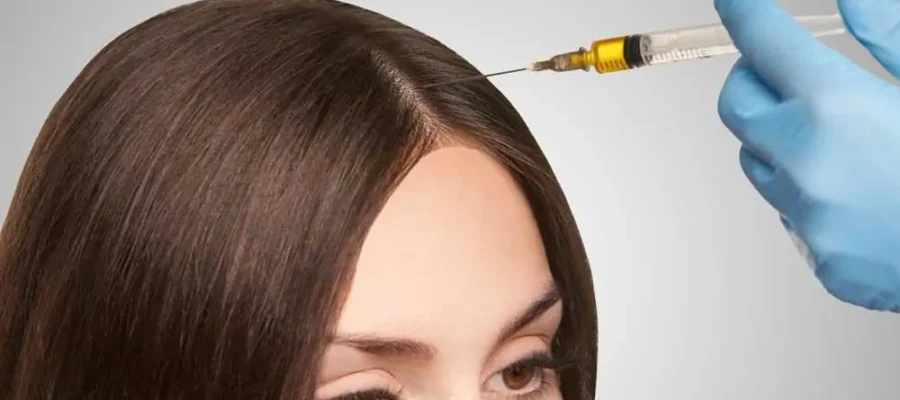
What is PRP?
PRP is a treatment that uses your own platelet-rich plasma to stimulate healing and hair growth. During the procedure, a small amount of your blood is drawn and spun in a centrifuge to separate the platelet-rich component.
This concentrated plasma is injected into targeted areas to promote cell regeneration, increase blood flow, and support tissue repair. PRP is commonly used in hair restoration, skin rejuvenation, and orthopedic treatments because it’s natural, safe, and minimally invasive. The growth factors inside PRP help strengthen follicles, reduce shedding, and encourage healthier, thicker hair over time.
PRP Treatment Miami
PRP treatment Miami is a popular, minimally invasive therapy that uses platelet-rich plasma to stimulate hair growth and repair tissues.
In Miami, PRP is commonly performed in hair restoration clinics by drawing a small amount of blood, separating the platelet-rich portion, and injecting it into thinning areas. The high concentration of growth factors helps strengthen follicles, improve density, and reduce shedding. Miami clinics offer medical-grade centrifuge systems and tailored treatment plans to maximize results.
How PRP Treatment Works?
Platelets are best known for helping blood clot, but they also contain growth factors and signaling proteins that play a role in healing. In a PRP procedure, a small amount of blood is drawn, then spun in a centrifuge to separate components. The provider collects the platelet-rich portion and applies it to a targeted area—most commonly through PRP injections into the scalp or skin, or sometimes as part of a combined approach such as microneedling with PRP.
The goal is to create a more supportive environment for the tissue you’re treating. In hair restoration, that usually means improving scalp conditions and supporting follicles that are still active but struggling. In facial PRP, the focus tends to be on improving overall skin quality—glow, texture, and fine lines—rather than changing facial structure. In orthopedics, PRP is sometimes used to help calm irritation and encourage recovery in tendons, ligaments, or joints, often alongside physical therapy.
Where PRP Is Commonly Used?
One reason PRP treatment gets so much attention is its versatility. In hair clinics, PRP for hair loss is typically offered for early thinning, diffuse shedding, or as a supportive add-on alongside other hair treatments. In aesthetics, PRP is used to refresh skin quality, especially under-eye texture or dullness, though outcomes vary and subtlety is normal. In sports medicine and orthopedic settings, PRP is sometimes considered for chronic tendon pain, mild-to-moderate joint symptoms, or recovery support after certain injuries.
It’s important to match PRP to the right goal. If your concern is severe hair loss where follicles are no longer active, PRP won’t “bring back” hair in areas that are fully bald. If your concern is deep facial volume loss, PRP won’t replace filler or lifting procedures. And if joint pain is caused by advanced structural changes, PRP may offer limited benefit. PRP works best when there’s still tissue worth supporting.
What a Typical PRP Appointment Looks Like?
Most PRP sessions follow a similar flow. The provider reviews your history, confirms candidacy, draws blood, prepares the PRP, and then applies it to the target area. For scalp PRP, the treatment area is usually mapped first so injections are evenly distributed. For facial PRP, it may be injected with a fine needle or paired with microneedling, depending on your skin and goals.
Discomfort is usually manageable. Many clinics use topical numbing for the scalp or face to improve comfort. Afterward, you may have mild soreness or a “tight” feeling for a day or two, plus temporary redness or swelling depending on the area treated.
PRP for Hair Loss
Hair PRP is most often used for thinning rather than complete baldness. The best candidates typically still have miniaturizing hairs—those finer, weaker hairs that indicate follicles are active but underperforming. In that setting, PRP may help improve hair thickness, reduce shedding, and support a healthier growth cycle. It’s commonly used as a standalone plan for early hair loss or as an add-on to other treatments.
One practical advantage is that PRP doesn’t require daily compliance the way topical or oral options do. The tradeoff is that PRP usually needs multiple sessions and maintenance. If you stop entirely, the underlying hair loss process may continue. Think of PRP less like a permanent “fix” and more like a supportive strategy that may help you hold ground or improve quality.
PRP for Skin
In aesthetics, PRP is often marketed as a glow-up treatment, and that’s a fair description when expectations are realistic. Many people notice improved skin texture, better hydration, and a healthier-looking tone over time. Fine lines may soften subtly. Acne marks and uneven texture can improve gradually, especially when PRP is combined with other skin treatments.
The key word is gradual. Skin remodeling takes time. A single session can make your skin feel fresher, but the more noticeable improvements tend to appear after a series and then continue as collagen support develops. PRP won’t change your bone structure or dramatically lift tissue, but it can make the skin you’re in look more “awake.”
PRP for Joints and Tendons
PRP for orthopedic concerns is usually part of a broader plan. People explore PRP for chronic tendon irritation, nagging sports injuries, or joint discomfort where inflammation and tissue quality play a role. Providers often pair PRP with rehab exercises, strength work, and activity modifications. If you treat PRP like a one-time reset while continuing the same habits that caused the problem, you may be disappointed.
A good provider will explain what PRP can reasonably change and what it can’t. They should also screen for conditions that may require imaging, a different diagnosis, or a different treatment path altogether.
Side Effects
Because PRP uses your own blood, allergic reactions are uncommon, but side effects can still happen. Temporary redness, swelling, bruising, tenderness, and mild headaches (especially with scalp PRP) are reported by some patients. Infection risk is low when performed in a proper medical setting with sterile technique, but it’s never zero.
Certain medical conditions, medications, and blood-related issues can change candidacy. A responsible provider asks about bleeding risks, active infections, autoimmune conditions, pregnancy status, and any relevant medications. If a clinic doesn’t ask basic medical questions, that’s a reason to pause.
PRP Treatment Miami Cost 2026
PRP treatment Miami cost in 2026 typically ranges from $300 to $700 per session depending on the clinic and technology used.
In Miami, prices vary based on the centrifuge quality, the specialist’s experience, and whether the clinic offers advanced PRP systems with higher platelet concentration. Most patients need 3 to 6 sessions, which increases the total cost. Clinics may also provide package discounts for multi-session treatments.