



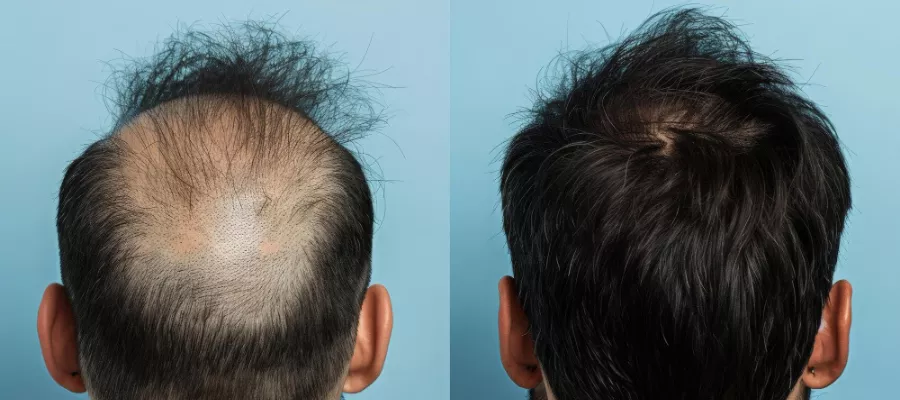
When you start comparing DHI vs FUE in Miami, it’s usually because you want one thing: a result that looks natural on your head, not just a method that sounds impressive on a clinic website. And that’s exactly how you should approach it. DHI vs FUE in Miami isn’t a debate with one winner—it’s a matching process. Your hair loss pattern, donor strength, styling habits, and even your day-to-day life in Miami (sun, sweat, humidity) can push the decision in one direction. If you’re torn between DHI vs FUE in Miami, this guide will help you connect the dots between technique and real-world outcomes.
Most people make the mistake of choosing a method first, then trying to fit their hair loss into it. The smarter route is the opposite: understand your pattern, then decide whether DHI vs FUE in Miami should tilt toward precision (often DHI) or coverage efficiency (often FUE). Let’s break it down in a way that actually helps you decide.
What DHI Really Means (Beyond the Marketing)
In the DHI vs FUE in Miami conversation, DHI stands for Direct Hair Implantation. The key difference is the implantation step. With DHI, grafts are implanted using an implanter pen, allowing placement and channel creation to happen in one motion. That design gives the surgeon a high level of control over angle, direction, and depth—details that matter most in the frontal zone and hairline work.
People often assume DHI automatically means “denser” or “better.” In reality, DHI is best described as a precision tool. In DHI vs FUE in Miami, DHI tends to shine when you’re working around existing hair, trying to thicken without shaving everything down, or fine-tuning a hairline where millimeters change the entire look of your face.
DHI can also be slower, because each graft is loaded and placed carefully. That’s not a downside if your case demands finesse. It becomes a downside only when a clinic tries to push large graft counts without the time and team structure needed to do DHI properly.
What FUE Really Means (And Why It’s Still the Workhorse)
FUE, or Follicular Unit Extraction, is the method most people recognize when they hear modern hair transplant. In the DHI vs FUE in Miami comparison, FUE describes how grafts are harvested: follicles are extracted one by one from the donor area (usually the back and sides of the scalp). After extraction, the recipient area is prepared by creating channels (incisions), and then grafts are placed into those channels.
FUE is popular for a reason. It is versatile, scalable, and effective for larger areas. If your hair loss pattern includes broad recession, mid-scalp thinning, or significant crown work, FUE is often the practical choice in DHI vs FUE in Miami because it can efficiently move a high number of grafts with predictable planning.
That said, the method name doesn’t guarantee the result. A beautifully executed FUE case can look softer and more natural than a rushed DHI case. In DHI vs FUE in Miami, the team’s experience and planning usually matter more than the letters.
Hair Loss Patterns: The Real Decider in DHI vs FUE in Miami
The most useful way to decide DHI vs FUE in Miami is to map the pattern first. Not everyone is losing hair the same way, even if the mirror makes it feel similar.
If your hair loss is mainly frontal—receding temples, thinning behind the hairline, a “see-through” look under bright light—DHI can be an excellent match in DHI vs FUE in Miami because precise placement helps rebuild the frame of the face. If you still have a lot of native hair, DHI’s ability to place grafts between existing follicles can be a major advantage.
If your hair loss is more advanced—large bald zones, thinning across the top, a crown that has opened up—FUE often makes more sense in DHI vs FUE in Miami because it’s designed for broader coverage and can be more time-efficient for high graft numbers.
If your pattern is diffuse thinning (hair everywhere gets weaker rather than clean bald spots), the best plan in DHI vs FUE in Miami often depends on how stable your loss is and how strong your donor area is. Diffuse cases can look great, but they demand careful density planning and realistic expectations.
Hairline Goals: Where DHI Often Pulls Ahead
Hairline work is where DHI vs FUE in Miami starts to feel personal. Some people want a subtle restoration that looks like they never lost anything. Others want a bold change. The best hairlines don’t look “perfect”—they look believable.
DHI is frequently chosen in DHI vs FUE in Miami for hairline refinement because the implanter pen can help control angle and direction with a high level of detail. That matters in the first centimeter of the hairline, where natural irregularity, soft transitions, and fine singles create the illusion of a real, untouched hairline.
FUE can absolutely produce a natural hairline too. In DHI vs FUE in Miami, the hairline result depends on the surgeon’s design and the way grafts are sorted and placed—singles in front, multi-hair units behind, and a density gradient that doesn’t look like a wall of hair. If a clinic is strong in artistic planning, FUE hairlines can be stunning.
Density Planning: Why “More Grafts” Isn’t Always Better
One of the most misunderstood parts of DHI vs FUE in Miami is density. People hear numbers and assume higher graft count equals better result. But density only looks natural when it matches your hair caliber, curl pattern, color contrast with scalp, and long-term loss trajectory.
DHI can be helpful in DHI vs FUE in Miami for dense packing in targeted zones, especially when the goal is to add thickness without fully rebuilding a large area. Because placement is controlled, the surgeon can focus density where it creates the most visible improvement, like the frontal third.
FUE is often better in DHI vs FUE in Miami when you need even distribution across a larger canvas. Coverage is a design problem, not just a graft problem. A well-planned FUE case spreads grafts in a way that looks consistent from multiple angles, especially in Miami’s harsh outdoor lighting.
The most natural look usually comes from honest planning: build a strong frame in front, create continuity through the mid-scalp, and treat the crown strategically rather than trying to “fill it like a bucket.”
Donor Area Reality: The Limiting Factor in DHI vs FUE in Miami
You can’t talk about DHI vs FUE in Miami without talking about the donor area. Your donor is the bank. Spend it carelessly and you can’t fix it later.
Both DHI and FUE typically use FUE-style extraction (even many DHI cases still extract follicles similarly). The difference isn’t only how follicles are taken—it’s how many are taken, from where, and how evenly they’re distributed. Overharvesting creates a thin donor that looks patchy, especially if you wear fades or short cuts—common in Miami.
In DHI vs FUE in Miami, donor management becomes even more important if you’re young or your hair loss is still progressing. A clinic that plans for the next decade—rather than the next Instagram photo—will protect donor reserves and build a result that still looks balanced if you thin further.
Shaving, Lifestyle, and Miami Practicalities
A real-life factor in DHI vs FUE in Miami is how you live. Some patients want minimal shaving because they work on camera, in hospitality, or simply don’t want the “buzzed transplant” look. DHI can sometimes be performed with less shaving in selected cases, especially when the goal is thickening rather than full reconstruction.
FUE usually requires more shaving in the recipient area for efficient placement, especially for large sessions. But it can also be cleaner and more predictable for big changes, which is why it remains so popular in DHI vs FUE in Miami.
Miami’s climate matters too. Sun exposure, sweat, and humidity can irritate healing scalp skin if aftercare isn’t respected. Whether you choose DHI or FUE in DHI vs FUE in Miami, your first couple of weeks should be planned like recovery time, not beach time.
Healing and Downtime: What Most People Actually Experience
In DHI vs FUE in Miami, many patients ask which method heals faster. The honest answer is: the overall timeline is similar, but the early visual phase can feel different.
With DHI, some patients report less noticeable recipient trauma because channels are created during placement rather than pre-made across the entire area. With FUE, redness can look slightly more pronounced at first when large areas are incised for channel creation. But both methods typically go through the same stages: initial redness and scabbing, scab shedding, a quiet phase, then shedding and regrowth.
Your donor area also contributes to downtime. Extraction density, punch size, and how your skin heals will determine how quickly the back looks “normal.” In DHI vs FUE in Miami, a skilled team aims for a donor that looks clean even as it grows out, without obvious patchiness.
Results Timeline: When You’ll See “The Real You” Again
It’s easy to underestimate how long hair takes to grow. In DHI vs FUE in Miami, the timeline is not about how fast the procedure is—it’s about biology.
Most patients see scabs clear within the first couple of weeks. Then comes a phase that feels anticlimactic. The transplanted hairs often shed, which can make it look like nothing happened. That shedding is typically normal; the follicle remains, and growth restarts later.
New growth is usually noticeable around months three to four. By month six, most people see a meaningful change. By months nine to twelve, the result looks “real” in daily life—hairline framing, styling options, and density that no longer feels like a work in progress. In DHI vs FUE in Miami, crown results can appear later than the front because crown growth patterns tend to mature more slowly.
Choosing a Clinic in Miami: How to Avoid a Decision You Regret
The most important decision in DHI vs FUE in Miami isn’t DHI or FUE—it’s who is doing the work and how they plan it. Miami has excellent clinics, but it’s also a competitive market where marketing can be louder than outcomes.
Look for consistency in before-and-after results, not just one perfect case. Pay attention to hairline softness, temple work, and how natural the density looks under bright lighting. Ask who performs extraction and who performs implantation. In DHI vs FUE in Miami, a strong team structure is essential because fatigue and rushed placement can affect outcomes.
Also pay attention to consultation quality. A good clinic will talk about donor limits, future hair loss, medical stabilization if needed, and what a realistic density plan looks like for your pattern.
Cost Considerations in DHI vs FUE in Miami
Cost comes up in every DHI vs FUE in Miami search, but the meaningful question isn’t “Which is cheaper?” It’s “Which gives me the best chance at a natural result for my pattern without wasting donor supply?”
Pricing can vary based on clinic standards, surgeon experience, team size, technique complexity, and the graft count needed for your pattern. DHI is sometimes priced higher because it can be more labor-intensive and requires specialized implantation tools. FUE pricing can vary widely depending on whether the clinic is high-volume or boutique.
Because pricing is individualized and depends heavily on your needs, comparisons only make sense after a consultation. DHI vs FUE in Miami fiyatları için hemen bize ulaşın.
Frequently Asked Questions
DHI vs FUE in Miami: Which option usually fits a frontal recession pattern best?
If your main issue is recession at the temples and a thinning frontal zone, the best choice in DHI vs FUE in Miami often depends on how much native hair you still have. When there’s existing hair that needs to be protected, DHI can be a strong fit because careful implantation between existing follicles can reduce trauma and support a natural blend. If the frontal zone is more open and needs a broader rebuild, FUE may be more efficient and still produce a soft, natural hairline if the design is done well. For many patients, the “right” answer in DHI vs FUE in Miami is the one that balances hairline artistry with donor preservation, not the one that promises the biggest change the fastest.
DHI vs FUE in Miami: What’s the realistic healing timeline and what should I plan around?
-
Days 1–3: Mild swelling, tightness, and visible redness are common; protecting grafts from friction and sun is the priority.
-
Days 4–10: Scabs form and start shedding naturally with proper washing; donor sensitivity typically decreases.
-
Weeks 2–6: Shedding of transplanted hairs often occurs; follicles usually remain and prepare for regrowth.
-
Months 3–4: Early regrowth may begin; changes can look uneven at first.
-
Months 6–9: Density becomes noticeably stronger; styling starts to feel more normal.
-
Months 9–12: Results typically look complete in everyday life, with continued maturation possible beyond a year.
DHI vs FUE in Miami: Can either method guarantee higher density?
No method guarantees density on its own. In DHI vs FUE in Miami, density comes from donor capacity, graft survival, placement strategy, and how your hair characteristics work with your scalp contrast. DHI can be excellent for targeted density and detailed placement, while FUE can be excellent for balanced coverage across larger areas. The strongest density outcomes usually come from a plan that prioritizes the frontal third, uses a natural gradient, and avoids overpacking areas that won’t hold extreme density safely.
DHI vs FUE in Miami: What determines the price difference?
-
The number of grafts your pattern requires and how complex placement will be.
-
The surgeon’s experience and whether critical steps are physician-led or delegated.
-
The clinic’s team size, time per patient, and whether it’s high-volume or boutique.
-
The technique approach, including whether detailed implanter placement is used.
-
Add-ons that may be included in a package, such as follow-up care protocols.
DHI vs FUE in Miami: Which one looks more natural in real life?
In real life, the most natural results in DHI vs FUE in Miami come from hairline design and direction control, not the label. A natural result has softness at the front, tiny irregularities that mimic real growth, and a density plan that matches your hair’s thickness and your age. Both DHI and FUE can deliver that when the team is experienced and the plan fits your pattern.