



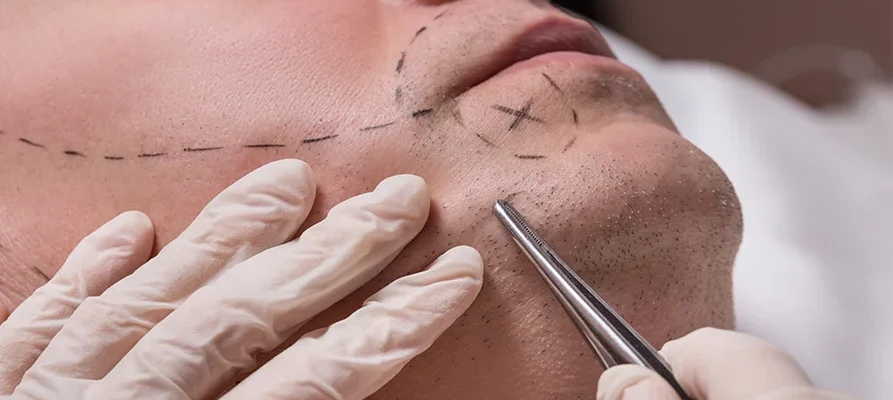
Beard Transplant Miami
A beard transplant in Miami is a specialized procedure that restores or enhances facial hair using FUE grafts taken from the scalp. In Miami, skilled surgeons implant individual follicles to create a fuller, well-defined beard with natural growth patterns. The treatment is ideal for men with patchy areas, hormonal thinning or scarring. Miami clinics use advanced micro-punch tools and detailed mapping to ensure precise density and symmetry.
Recovery is quick, and results become thicker and more uniform as transplanted hairs grow over several months. Beard transplants are increasingly popular in Miami due to high success rates and natural aesthetics.
What is Beard Transplant?
A beard transplant is a procedure that restores or enhances facial hair using grafts taken from the scalp. During the treatment, individual hair follicles are extracted (usually with the FUE technique) and implanted into areas where the beard is thin or patchy.
Each graft is placed at a specific angle and direction to mimic natural facial hair growth. The procedure is ideal for men with uneven beard patterns, scarring, or genetic thinning. Recovery is quick, and transplanted hairs begin to grow permanently within a few months. A beard transplant provides fuller, well-defined, and long-lasting facial hair.
How is Beard Transplantation Done?
Beard transplantation is done by extracting healthy hair follicles from a donor area (usually the back of the scalp) and implanting them into the beard region to create a fuller and natural-looking facial hair pattern. The procedure uses advanced hair transplant techniques to ensure correct angle, direction, and density.
Step-by-Step Beard Transplant Procedure:
- Consultation and Beard Design: The surgeon analyzes facial structure and designs a beard shape that matches the patient’s features and expectations.
- Local Anesthesia: Both the donor and beard areas are numbed to ensure a comfortable and pain-free procedure.
- Graft Extraction (FUE Method): Using the FUE technique, individual hair follicles are carefully extracted from the donor area.
- Channel Creation: Tiny incisions are opened in the beard area according to the natural growth direction of facial hair.
- Graft Implantation: The extracted grafts are implanted one by one, ensuring the correct angle and density for a realistic appearance.
- Aftercare Process: After the procedure, the area is cleaned, and detailed post-operative instructions are provided to support healing.
Why People Choose a Beard Transplant Miami?
People search Beard Transplant Miami for a few common reasons. Some live in South Florida and want a convenient option close to home. Others travel in because Miami is simple to reach and offers plenty of recovery-friendly amenities, hotels, food options, and a generally relaxed environment that makes it easier to lay low for a few days. For out-of-town patients, Miami can feel like a place where you can recover discreetly without disrupting your routine too much.
There’s also a practical side to planning in a warm, sunny city: you’ll want to take sun exposure seriously during healing. Miami’s outdoor lifestyle is a plus, but fresh grafts don’t love heat, sweat, and direct sunlight. A good clinic will give you strict aftercare rules, and following them is often what separates a smooth recovery from a frustrating one.
Who is a Good Candidate for Beard Transplant Surgery?
Many candidates have patchy beard growth caused by genetics, which is common and not “fixable” with oils or supplements. Others have thin areas from acne scarring, injury, or previous procedures. Some want a stronger chin area, a fuller jawline, or more density in the mustache connection points. A beard transplant can also help people who want to balance facial proportions, adding structure where the beard naturally frames the lower face.
That said, candidacy depends on donor supply and realistic goals. If your donor area is limited, a responsible plan may focus on high-impact zones rather than trying to fill everything densely in one session. Your hair caliber and curl pattern matter too. Thick or slightly wavy hair can create the look of fullness with fewer grafts compared to very fine, straight hair. A skilled provider will set expectations based on what your hair can realistically deliver.
How Long Does it Take To See Beard Transplant Results?
You typically start seeing visible beard transplant results within 3 to 4 months.
In the first few weeks, transplanted hairs may shed, which is a normal part of the healing process. New growth usually begins around the third month, becoming thicker and more noticeable by month six. Full results take 9 to 12 months, as the follicles mature and the beard reaches its final density and texture. Consistent aftercare, avoiding shaving early on, and following surgeon instructions help ensure strong, healthy growth. Overall, beard transplants offer gradual but permanent results that continue improving over time.
Is Beard Transplantation Permanent?
Yes, a beard transplantation is permanent because the transplanted follicles keep growing for a lifetime. The hairs used in a beard transplant are taken from the scalp’s donor area, which is genetically resistant to shedding. Once these follicles are implanted into the beard region and fully healed, they behave like normal facial hair and continue growing naturally. After the initial shedding phase, new permanent growth begins within a few months and strengthens over time.
Healing and Growth
After surgery, you’ll see tiny scabs and mild redness in the beard area. Swelling can happen, especially around the cheeks and jawline, and it usually settles as the first week passes. The donor area on the scalp may feel tender and look like small dots that fade with time. During the early healing stage, most people focus on careful washing, avoiding friction, and staying away from activities that raise heat and sweating.
A key moment is shedding. Many transplanted hairs shed in the first few weeks. That can be stressful if you weren’t expecting it, but it’s often part of the normal cycle. The follicles remain in place, and new growth begins later. When regrowth starts, it can look uneven at first—some areas come in earlier, some later. Over time, texture and density usually improve, and the beard becomes easier to style as the hair matures.
Risks and Side Effects You Should Know
Most side effects are temporary, like swelling, redness, itching, and short-term tenderness. Small pimples or ingrown-hair–like bumps can occur during regrowth as hairs break through the skin, especially if you’re prone to folliculitis. Infection is uncommon when aftercare is followed, but it’s still a medical procedure, so hygiene and instruction compliance matter.
Another consideration is shock loss, temporary shedding of some existing hairs in the recipient area. On the beard, this is less commonly discussed than on the scalp, but it can still happen. Also, not every graft grows. Even with a well-performed procedure, growth rates vary, which is why realistic density planning is important. The best clinics plan for a natural look even if growth isn’t mathematically perfect in every square centimeter.
Miami-Specific Recovery Tips Without the Hype
Miami’s heat and sun are real factors. Sweating heavily too early can irritate healing skin, and strong sun exposure can prolong redness and sensitivity. If you’re traveling, think ahead: schedule your recovery days so you’re not rushing through airports the next morning, and avoid packing your calendar with outdoor plans. It’s tempting to treat it like a vacation, but the first week is about protecting your investment.
Also, consider your grooming routine. Many people want to “shape it up” quickly, but early trimming or shaving can disrupt healing if done too soon. Your clinic should provide guidance on when you can safely trim, when you can start fading edges, and how to wash without disturbing the grafts.
Beard Transplant Miami Cost 2026
Beard transplant Miami cost in 2026 typically ranges from $6,000 to $12,000 depending on graft count and clinic expertise.
In Miami, prices are higher than many other regions because procedures are performed by board-certified surgeons using advanced FUE technology. The final cost depends on how many grafts are needed to fill patchy areas, as well as the surgeon’s experience, clinic reputation and whether services like PRP or aftercare packages are included. Larger, full-beard restorations sit at the top of the price range, while smaller touch-ups cost less.